
The July 10th Refund Deadline You Didn't See Coming
This webinar is available for Virtual or LIVE In-Person attendance.
The LIVE class will be held at: TBD
Tax Professionals that attend are encouraged to accept a pro bono tax controversy case assignment from NYCLA, an ABA-sponsored Tax Court Pro program or a NY or NJ low-income Tax Clinic.
Kwong & Abdo: Recovering Pandemic-Era Tax Penalties and Interest
This Program Teaches You How to Turn COVID-Era IRS Payments Into Refund Claims
Two landmark decisions — Kwong v. United States (2025) and Abdo v. Commissioner (2024) — have fundamentally changed the treatment of federal tax penalties and interest during the COVID-19 disaster period.
The takeaway is simple, but powerful:
From January 20, 2020 through July 10, 2023, federal tax penalties and interest were mandatorily suspended under IRC § 7508A(d). That means many taxpayers overpaid — and those amounts may now be recoverable.
The clock is ticking:
For most taxpayers, the refund claim deadline is July 10, 2026.
If you represent clients who paid penalties or interest during this period, this is not optional knowledge — it is an actionable opportunity.
What You Will Learn
This program provides a complete, practitioner-ready framework to:
- Identify clients eligible for penalty and interest refunds
- Apply the holdings of Kwong and Abdo with confidence
- Compute refund amounts using IRS transcripts and AI tools
- Prepare and file Form 843 claims correctly and defensibly
-Navigate examination, appeals, CDP, and Tax Court implications
-Incorporate advanced strategies including:
- IRC § 6404(e) interest abatement
- § 6603 deposits to stop interest accrual
- Overpayment interest claims under the Fleisher theory
- Address multi-year and cumulative claims strategies
- Evaluate state-level considerations (including NY and NJ)
What Makes This Program Different: This is not a theoretical discussion. This is a complete implementation system.
Attendees receive a fully developed toolkit that takes them from: “I think this applies” → “I filed the claim.”
IRS Program #: 7Q3WU-T-00882-26
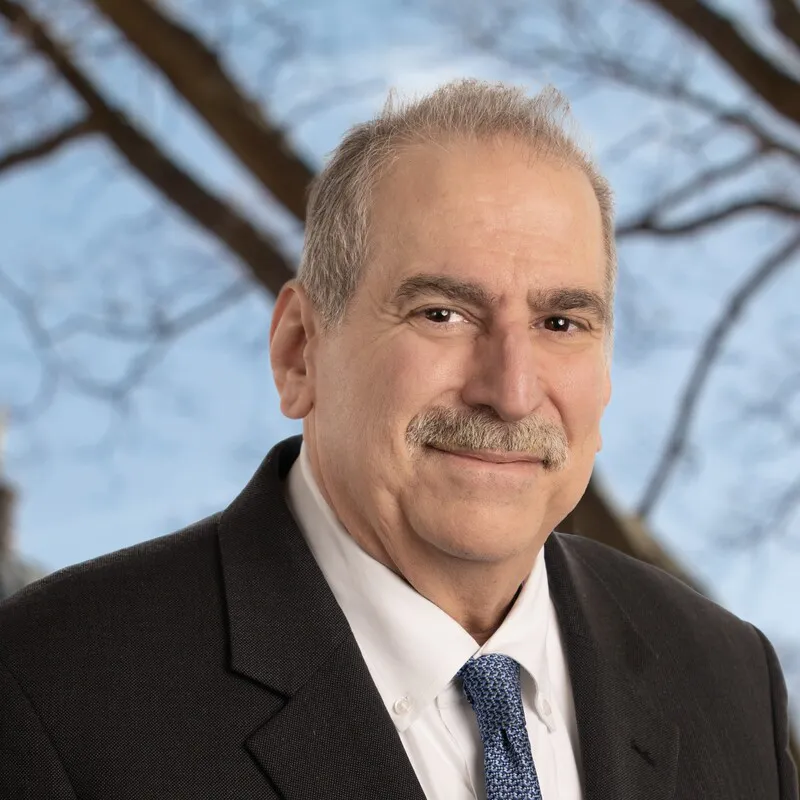
Frank Agostino
,
Esq.
Frank Agostino is one of the most accomplished tax controversy attorneys in the country, with more than four decades of litigation experience and a string of landmark victories that have reshaped IRS enforcement and Tax Court procedure — including Commissioner v. Zuch before the U.S. Supreme Court (2025) and Chai v. Commissioner in the Second Circuit (2017).
Because of Frank’s stellar reputation in the tax bar, he has been ranked in Chambers in Band 1 for Tax: Fraud Nationwide (USA) and in Band 1 for High Net Worth Private Client: Tax.
A former IRS District Counsel attorney and Special Assistant U.S. Attorney, Frank has also taught tax controversy at Seton Hall and Rutgers Law, and currently serves on the Advisory Board of the Journal of Tax Practice and Procedure.
Recommended Webinars
The Trial of a US Tax Court Case – Practice & Procedure Part II
3 Free NY & NJ CLE, CPE and IRS CE/NASBA CPE Credits
Hybrid Event - The Trial of a US Tax Court Case – Practice & Procedure Part II THIS EVENT IS RESCHEDULED FROM OCTOER 14, 2025 This webinar was available for Virtual or LIVE In-Person attendance. "Our best deal is always to become a monthly subscriber"
 The Trial of a US Tax Court Case – Practice & Procedure Part II
Stock Options: ISOs, ESPP, NSOs, RSUs, RSAs, and elections
2 IRS CE/2 CTEC/2 NASBA CPE
"Our best deal is always to become a monthly subscriber" *Self-Study recording not available for NASBA CPE credit.
Stock Options: ISOs, ESPP, NSOs, RSUs, RSAs, and electionsTo Elect or Not to Elect: That is the Entity Classification Question
2 IRS CE/2 NASBA CPE*
"Our best deal is always to become a monthly subscriber" *Self-Study recording not available for NASBA CPE credit.
To Elect or Not to Elect: That is the Entity Classification QuestionIntermediate and Advanced Investments
2 IRS CE/2 CTEC/2 NASBA CPE
As investment strategies become more sophisticated, tax professionals must navigate increasingly complex reporting rules. This webinar explores advanced investment vehicles and their corresponding tax implications, including option contracts (puts and calls), foreign currency trading, exchange-traded funds (ETFs), and emerging assets such as Bitcoin, cryptocurrency, and other digital assets. It examines the critical distinctions between traders and investors, methods for determining basis in diverse asset classes, and the rules for reporting trades, sales, and associated net investment income tax (NIIT). This webinar equips practitioners to address client questions, ensure compliance, and reduce the risk of IRS scrutiny in an evolving investment landscape. "Our best deal is always to become a monthly subscriber" *Self-Study recording not available for NASBA CPE credit.
Intermediate and Advanced InvestmentsI’m Tax-Exempt ... Why Complexity and What’s Form 990?
2 IRS CE/2 CTEC/2 NASBA CPE
Join Michael as he addresses the various concepts and rules surrounding the use of tax-exempt organizations. He will discuss the unique federal income tax rules associated with such organizations, including IRC §501(c)(3. He will also provide a comprehensive review of Form 990 EZ and related schedules. We also highlight the various 990 series filings, employment issues, unrelated business income and how to perfect a charitable contribution from the tax-exempt organization point of view. This program is an opportunity for the participant to expand their understanding of tax-exempt organizations. In closing, Michael will discuss some of the tax planning experiences using tax-exempt organizations. *Self-Study recording not available for NASBA CPE credit.
I’m Tax-Exempt ... Why Complexity and What’s Form 990?Small Business Retirement Plans
2 IRS CE/2 CTEC/2 NASBA CPE
This program provides an in-depth overview of retirement plan options available to small business owners, including IRA-based plans (Traditional, Roth, SEP, and SIMPLE), §401(k) plans (Solo, SIMPLE, Safe Harbor, and Traditional), and defined benefit arrangements. It discusses the advantages and limitations of each plan type, funding and contribution rules, catch-up provisions under SECURE 2.0, and the tax benefits to both employers and employees. The program also covers practical steps in establishing, operating, and terminating plans, as well as tax credits (Form 8881) available to qualifying small employers. *Self-Study recording not available for NASBA CPE credit.
Small Business Retirement PlansMeet Form 1-A: The IRS Just Changed the Game
1 IRS CE/1 CTEC/1 NASBA CPE
*Self-Study recording not available for NASBA CPE credit.
Meet Form 1-A: The IRS Just Changed the GameFundamentals of PTET
1 IRS CE/1 CTEC/1 NASBA CPE
"Our best deal is always to become a monthly subscriber" *Self-Study recording not available for NASBA CPE credit.
Fundamentals of PTETSocial Security Fairness Act and IRMAA
2 IRS CE/2 CTEC/2 NASBA CPE
Did you know your client's Adjusted Gross Income can affect how much they pay for Medicare premiums? You will certainly get an earful from your client when they find out their Medicare premiums are going up. Is there anything you can do about it? This is called the Income-Related Monthly Adjustment Amount (IRMAA). We will review how IRMAA is computed and what we can do to help our clients manage their IRMAA amount. We will start with a bonus topic of the Social Security Fairness Act which was passed in January, 2025 which may affect some of your clients who can get retroactive Social Security benefits all the way back to 2024.
Social Security Fairness Act and IRMAA
Hmm...nothing here yet.