
The July 10th Refund Deadline You Didn't See Coming
Kwong & Abdo: Recovering Pandemic-Era Tax Penalties and Interest
This Program Teaches You How to Turn COVID-Era IRS Payments Into Refund Claims
Two landmark decisions — Kwong v. United States (2025) and Abdo v. Commissioner (2024) — have fundamentally changed the treatment of federal tax penalties and interest during the COVID-19 disaster period.
The takeaway is simple, but powerful:
From January 20, 2020 through July 10, 2023, federal tax penalties and interest were mandatorily suspended under IRC § 7508A(d). That means many taxpayers overpaid — and those amounts may now be recoverable.
The clock is ticking: For most taxpayers, the refund claim deadline is July 10, 2026.
If you represent clients who paid penalties or interest during this period, this is not optional knowledge — it is an actionable opportunity.
What You Will Learn
This program provides a complete, practitioner-ready framework to:
- Identify clients eligible for penalty and interest refunds
- Apply the holdings of Kwong and Abdo with confidence
- Compute refund amounts using IRS transcripts and AI tools
- Prepare and file Form 843 claims correctly and defensibly
-Navigate examination, appeals, CDP, and Tax Court implications
-Incorporate advanced strategies including:
- IRC § 6404(e) interest abatement
- § 6603 deposits to stop interest accrual
- Overpayment interest claims under the Fleisher theory
- Address multi-year and cumulative claims strategies
- Evaluate state-level considerations (including NY and NJ)
What Makes This Program Different: This is not a theoretical discussion. This is a complete implementation system.
Attendees receive a fully developed toolkit that takes them from:
“I think this applies” → “I filed the claim.”
This webinar is available for Virtual or LIVE In-Person attendance.
The LIVE class will be held at: TBD
Tax Professionals that attend are encouraged to accept a pro bono tax controversy case assignment from NYCLA, an ABA-sponsored Tax Court Pro program or a NY or NJ low-income Tax Clinic.
IRS Program #: 7Q3WU-T-00882-26
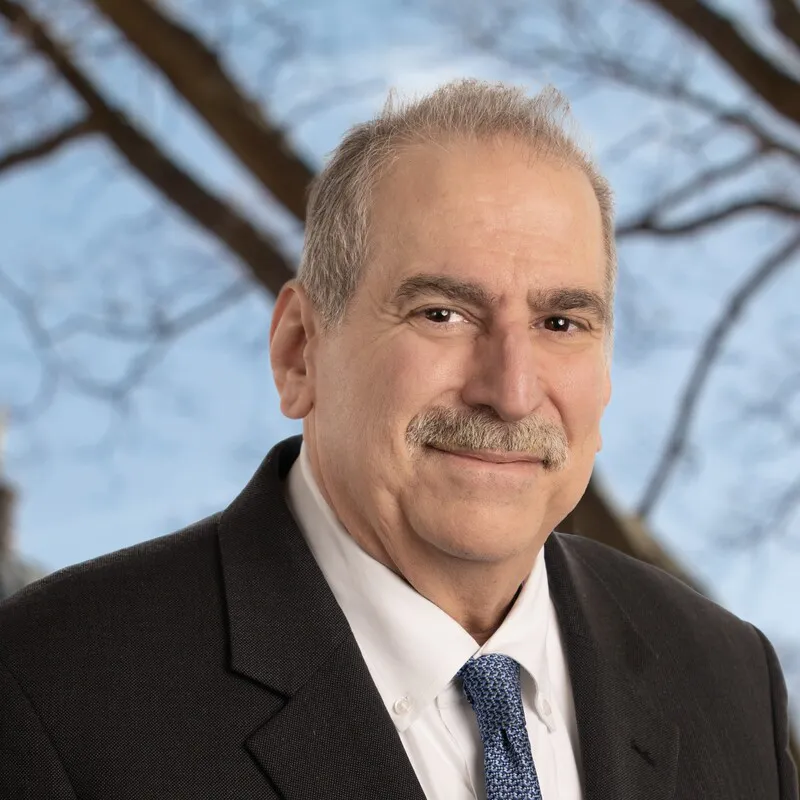
Frank Agostino
,
Esq.
During his four decades of practicing tax law, Frank Agostino has been the driving force behind many successful lawsuits that sought to establish fair tax enforcement principles for taxpayers.Frank has extensive courtroom experience, litigating more than 100 tax matters, several of which established important precedents for taxpayers. Frank defended the taxpayer in a landmark suit, Commissioner v. Zuch, 145 S.Ct. 1707 (2025),in which the U.S. Supreme Court established that the U.S. Tax Court has limited jurisdiction over certain tax enforcement matters. Similarly, in Chai v. Commissioner, 851 F.3d 190, 2nd Cir. 2017, Frank helped to establish that the IRS must obtain supervisory approval before imposing penalties in tax deficiency proceedings. In those and other significant cases, Frank’s challenges to government enforcement processes resulted in precedents that have changed the way the IRSand Tax Court do business, while equipping tax lawyers with new arguments with which to defend their clients. Because of Frank’s stellar reputation in the tax bar, he has been ranked in Chambers in Band 1for Tax: Fraud Nationwide (USA) and in Band 1 for High Net Worth Private Client: Tax. Before joining Kostelanetz, Frank was the president and founder of Agostino & Associates, a well-known tax controversy firm in New Jersey. Prior to entering private practice, Frank was an attorney with the Internal Revenue Service’sDistrict Counsel in Springfield, Illinois and Newark, New Jersey. He also served as a SpecialAssistant United States Attorney, where he prosecuted primarily criminal tax cases. As an adjunct professor, Frank taught tax controversy at Seton Hall University W. Paul StillmanSchool of Business and Rutgers School of Law. He also served as the co-director of the Rutgers Federal Tax Law Clinic. Frank is a frequent speaker and author on tax controversy and litigation matters. He serves on theAdvisory Board of the Journal of Tax Practice and Procedure. Frank is actively involved with theAmerican Bar Association and the New York County Lawyers’ Association. Frank is also the President of Taxpayers Assistance Corp., which provides tax and legal advice to low-incometaxpayers in the NY/NJ area.
Recommended Webinars
Tax Consequences of the Choice of Entity
3 Free NY & NJ CLE, CPE and IRS CE/NASBA CPE Credits
An overview of the tax consequences of choosing a business entity—explaining how structures like sole proprietorships, LLCs, S corporations, and C corporations impact liability, taxation, and long-term financial strategy.
 Tax Consequences of the Choice of Entity
Don’t Hate the Player, Hate the Gain: Gaming 1202 QSBS
2 IRS CE/2 CTEC/2 NASBA CPE
An overview of Section 1202 Qualified Small Business Stock (QSBS) rules, highlighting federal capital gains exclusions, eligibility requirements, and key updates under the One, Big, Beautiful Bill.
Don’t Hate the Player, Hate the Gain: Gaming 1202 QSBSCalifornia and The SB 711 Conformity Expansion Explained
An overview of California’s SB 711 Conformity Expansion, explaining how the law aligns state tax provisions with federal changes and what it means for businesses and taxpayers.
California and The SB 711 Conformity Expansion ExplainedR&D Credits 2025: New IRS Forms, New Rules, New Risks
2 IRS CE/2 CTEC/2 NASBA CPE
An overview of the 2025 updates to R&D tax credits, covering new IRS forms, revised compliance requirements, and emerging risks businesses need to understand before claiming the credit.
R&D Credits 2025: New IRS Forms, New Rules, New RisksFREE Ethics CE Webinar: Bill & Ted’s Most Excellent AI Ethics Adventure
2 IRS CE Ethics/2 CTEC Ethics/2 NASBA CPE Ethics**
Join John Sheeley, EA and Tax Practice Pro for our annual FREE ethics program — a tradition designed to give back to the tax community every Giving Tuesday. This year’s program takes a fun, insightful journey through the ethical challenges of using artificial intelligence in modern tax practice, inspired by the classic “Bill & Ted” films.
FREE Ethics CE Webinar: Bill & Ted’s Most Excellent AI Ethics AdventureOBBBA Workflow Overhaul: New Pay Stub Rules, Tip & Overtime Tracking, and Organizer Updates
No IRS or CTEC Credit. Only NASBA CPE (2)
A breakdown of the OBBBA workflow overhaul, explaining new pay stub requirements, updated tip and overtime tracking rules, and key changes to tax organizers and compliance processes.
OBBBA Workflow Overhaul: New Pay Stub Rules, Tip & Overtime Tracking, and Organizer UpdatesIs the Solopreneur Business Model Still Valid?
NASBA CPE Field of Study: Business Management & Organization NO IRS/NO CTEC
An analysis of whether the solopreneur model remains viable for solo tax professionals, exploring entity structure, self-employment tax exposure, liability considerations, scalability, and long-term tax planning strategy.
Is the Solopreneur Business Model Still Valid?AI For Research
1 IRS/1 CTEC/1 NASBA CPE
A practical overview of using AI for tax research, including benefits, limitations, compliance risks, and best practices for accuracy, documentation, and professional responsibility.
AI For ResearchFortify Your Office Security with Improvements to Your WISP
2 IRS CE/2 CTEC/2 NASBA CPE
A guide to strengthening your office security through strategic updates to your Written Information Security Plan (WISP), including risk assessments, data safeguards, employee training, and compliance best practices.
Fortify Your Office Security with Improvements to Your WISP
Hmm...nothing here yet.