
The July 10th Refund Deadline You Didn't See Coming
This webinar is available for Virtual or LIVE In-Person attendance.
The LIVE class will be held at: TBD
Tax Professionals that attend are encouraged to accept a pro bono tax controversy case assignment from NYCLA, an ABA-sponsored Tax Court Pro program or a NY or NJ low-income Tax Clinic.
Kwong & Abdo: Recovering Pandemic-Era Tax Penalties and Interest
This Program Teaches You How to Turn COVID-Era IRS Payments Into Refund Claims
Two landmark decisions — Kwong v. United States (2025) and Abdo v. Commissioner (2024) — have fundamentally changed the treatment of federal tax penalties and interest during the COVID-19 disaster period.
The takeaway is simple, but powerful:
From January 20, 2020 through July 10, 2023, federal tax penalties and interest were mandatorily suspended under IRC § 7508A(d). That means many taxpayers overpaid — and those amounts may now be recoverable.
The clock is ticking:
For most taxpayers, the refund claim deadline is July 10, 2026.
If you represent clients who paid penalties or interest during this period, this is not optional knowledge — it is an actionable opportunity.
What You Will Learn
This program provides a complete, practitioner-ready framework to:
- Identify clients eligible for penalty and interest refunds
- Apply the holdings of Kwong and Abdo with confidence
- Compute refund amounts using IRS transcripts and AI tools
- Prepare and file Form 843 claims correctly and defensibly
-Navigate examination, appeals, CDP, and Tax Court implications
-Incorporate advanced strategies including:
- IRC § 6404(e) interest abatement
- § 6603 deposits to stop interest accrual
- Overpayment interest claims under the Fleisher theory
- Address multi-year and cumulative claims strategies
- Evaluate state-level considerations (including NY and NJ)
What Makes This Program Different: This is not a theoretical discussion. This is a complete implementation system.
Attendees receive a fully developed toolkit that takes them from: “I think this applies” → “I filed the claim.”
IRS Program #: 7Q3WU-T-00882-26
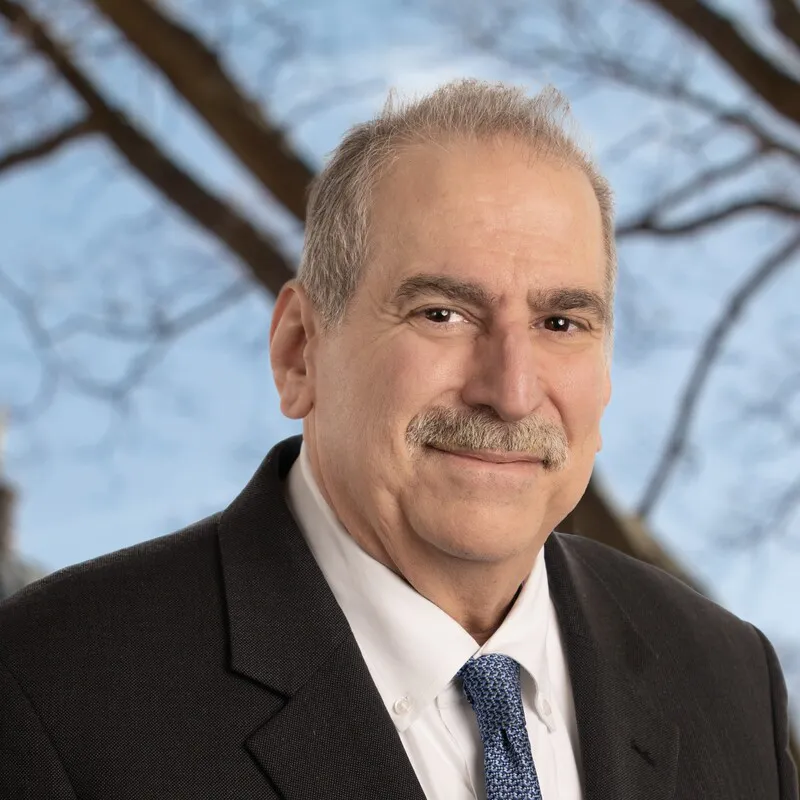
Frank Agostino
,
Esq.
Frank Agostino is one of the most accomplished tax controversy attorneys in the country, with more than four decades of litigation experience and a string of landmark victories that have reshaped IRS enforcement and Tax Court procedure — including Commissioner v. Zuch before the U.S. Supreme Court (2025) and Chai v. Commissioner in the Second Circuit (2017).
Because of Frank’s stellar reputation in the tax bar, he has been ranked in Chambers in Band 1 for Tax: Fraud Nationwide (USA) and in Band 1 for High Net Worth Private Client: Tax.
A former IRS District Counsel attorney and Special Assistant U.S. Attorney, Frank has also taught tax controversy at Seton Hall and Rutgers Law, and currently serves on the Advisory Board of the Journal of Tax Practice and Procedure.
Recommended Webinars
Navigating Delinquent, Streamlined, and Voluntary Disclosure Programs: Ensuring Compliance and Avoiding Penalties
2 IRS CE/2 NASBA CPE*
The webinar covers the Streamlined Filing Compliance Procedures, including eligibility for U.S. and non-U.S. residents, reduced penalty structures, and risks of audit selection. The Delinquent International Information Return and FBAR Procedures will be explored, including reasonable cause statements and potential audit risks. Finally, the IRS Criminal Investigation Voluntary Disclosure Practice will be analyzed, focusing on mitigation strategies, penalties, and the risks of willful noncompliance. Only available for TPP unlimited CE subscribers.
 Navigating Delinquent, Streamlined, and Voluntary Disclosure Programs: Ensuring Compliance and Avoiding Penalties
Setting up MFA for Everything: A Practical How-to
1 IRS CE/1 NASBA CPE*
Join us for the second webinar in our "2025 Tax Office Cyber Security Series", designed to help accounting and tax firms enhance their security posture and protect their sensitive data. Don’t miss this opportunity to lay the groundwork for better security and peace of mind! The webinar is only available to monthly subscribers.
Setting up MFA for Everything: A Practical How-toBest Practices for Substantiating Deductions and Proving Entitlement to Losses – Part II
2 Free NY & NJ CLE, CPE and IRS CE/NASBA CPE Credits
Tax Professionals that attend are encouraged to accept a pro bono tax controversy case assignment from NYCLA, an ABA-sponsored Tax Court Pro program or a NY or NJ low-income Tax Clinic.
Best Practices for Substantiating Deductions and Proving Entitlement to Losses – Part IINAVIGATING THE BBA PARTNERSHIP AUDIT REGIME: FROM RETURN PREPARATION TO LITIGATION
2 Free NY & NJ CLE, CPE and IRS CE/NASBA CPE Credits
Tax Professionals that attend are encouraged to accept a pro bono tax controversy case assignment from NYCLA, an ABA-sponsored Tax Court Pro program or a NY or NJ low-income Tax Clinic.
NAVIGATING THE BBA PARTNERSHIP AUDIT REGIME: FROM RETURN PREPARATION TO LITIGATIONOregon Wants YOU! (Even If You Don’t Want Oregon)
NO CE AVAILABLE FOR THIS PROGRAM
A No-Nonsense Guide to Surviving Oregon’s Tax Preparer Licensing Requirements Are you a tax professional who’s never set foot in Oregon—but suddenly being told you need to register there? Welcome to the Beaver State’s latest regulatory surprise! If you touch a tax return that involves an Oregon filing, the state says you must be licensed—no matter where you live or work. This practical, step-by-step program walks you through the process, from understanding the law to acing the licensing exam. No CE credit, no whining—just clear guidance on how to comply and move on with your life.
Oregon Wants YOU! (Even If You Don’t Want Oregon)S Corp Shareholder Basis & Form 7203
2 IRS CE/2 NASBA CPE*
"Our best deal is always to become a monthly subscriber" *Self-Study recording not available for NASBA CPE credit.
S Corp Shareholder Basis & Form 7203Partner Basis and New IRS Form 7217
2 IRS CE/2 NASBA CPE*
Do you know your client's basis in their partnership interest? Do you get the usual blank stare from a new client when you ask them for their basis in their partnership interest? The IRS has opened a whole new office to audit partner basis with a team of specially trained auditors. It is the partner's responsibility to maintain their partnership basis, not the partnership's responsibility. It is not their capital account! We will review how basis is calculated for partners. The IRS just issued Form 7217 for partners who receive noncash distributions from their partnership. We will review how basis is allocated for property that is distributed to the partner. The IRS is focusing on partner basis in their audits since losses cannot be claimed when basis goes to zero.
Partner Basis and New IRS Form 7217Claiming the Energy Credits and the Business Vehicle
2 IRS CE/2 NASBA CPE*
This program examines the use of the Commercial Clean Vehicle Credit and the Clean Vehicle Credit when the vehicle has a business use component.
Claiming the Energy Credits and the Business VehicleThere’s a Lid for Every Pot—What Every Tax Pro Should Know About ‘Simple’ Returns
1 IRS CE/1 NASBA CPE*
This course explores some of the statutory and regulatory return preparation requirements to which a tax professional is subjected without respect to the perceived skill level necessary to complete a return. In addition, the course frames alternatives available to taxpayers with simpler returns (various free/low-cost tax return preparation options). Finally, it explores hazards to which supposedly simple returns expose a tax professional and reminds tax professionals of the value that even “simple” return preparation provides clients.
There’s a Lid for Every Pot—What Every Tax Pro Should Know About ‘Simple’ Returns
Hmm...nothing here yet.