
The July 10th Refund Deadline You Didn't See Coming
This webinar is available for Virtual or LIVE In-Person attendance.
The LIVE class will be held at: TBD
Tax Professionals that attend are encouraged to accept a pro bono tax controversy case assignment from NYCLA, an ABA-sponsored Tax Court Pro program or a NY or NJ low-income Tax Clinic.
Kwong & Abdo: Recovering Pandemic-Era Tax Penalties and Interest
This Program Teaches You How to Turn COVID-Era IRS Payments Into Refund Claims
Two landmark decisions — Kwong v. United States (2025) and Abdo v. Commissioner (2024) — have fundamentally changed the treatment of federal tax penalties and interest during the COVID-19 disaster period.
The takeaway is simple, but powerful:
From January 20, 2020 through July 10, 2023, federal tax penalties and interest were mandatorily suspended under IRC § 7508A(d). That means many taxpayers overpaid — and those amounts may now be recoverable.
The clock is ticking:
For most taxpayers, the refund claim deadline is July 10, 2026.
If you represent clients who paid penalties or interest during this period, this is not optional knowledge — it is an actionable opportunity.
What You Will Learn
This program provides a complete, practitioner-ready framework to:
- Identify clients eligible for penalty and interest refunds
- Apply the holdings of Kwong and Abdo with confidence
- Compute refund amounts using IRS transcripts and AI tools
- Prepare and file Form 843 claims correctly and defensibly
-Navigate examination, appeals, CDP, and Tax Court implications
-Incorporate advanced strategies including:
- IRC § 6404(e) interest abatement
- § 6603 deposits to stop interest accrual
- Overpayment interest claims under the Fleisher theory
- Address multi-year and cumulative claims strategies
- Evaluate state-level considerations (including NY and NJ)
What Makes This Program Different: This is not a theoretical discussion. This is a complete implementation system.
Attendees receive a fully developed toolkit that takes them from: “I think this applies” → “I filed the claim.”
IRS Program #: 7Q3WU-T-00882-26
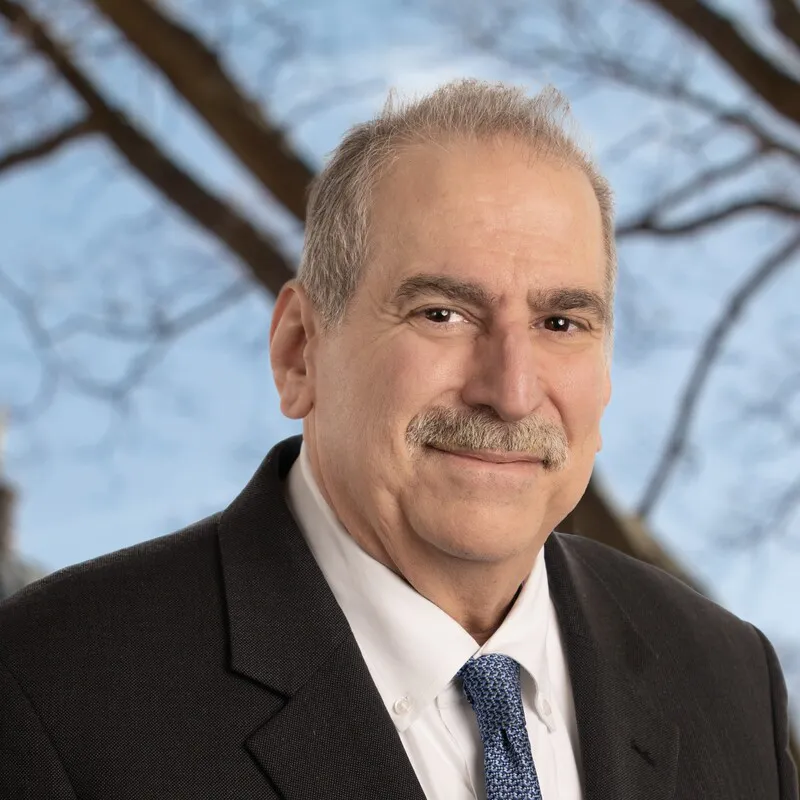
Frank Agostino
,
Esq.
Frank Agostino is one of the most accomplished tax controversy attorneys in the country, with more than four decades of litigation experience and a string of landmark victories that have reshaped IRS enforcement and Tax Court procedure — including Commissioner v. Zuch before the U.S. Supreme Court (2025) and Chai v. Commissioner in the Second Circuit (2017).
Because of Frank’s stellar reputation in the tax bar, he has been ranked in Chambers in Band 1 for Tax: Fraud Nationwide (USA) and in Band 1 for High Net Worth Private Client: Tax.
A former IRS District Counsel attorney and Special Assistant U.S. Attorney, Frank has also taught tax controversy at Seton Hall and Rutgers Law, and currently serves on the Advisory Board of the Journal of Tax Practice and Procedure.
Recommended Webinars
Tax Controversies Involving Entertainers, Performers, and Influencers - 2025
4 Free NY & NJ CLE, CPE and 4 IRS CE/4 NASBA CPE Credits
This detailed program explores the unique tax challenges and considerations faced by entertainers, performers, and influencers. It covers the complexities of income reporting, expense deductions, and compliance issues specific to individuals in the entertainment and social media industries. The program shows how to correctly categorize income, distinguish between business and personal expenses, and apply IRS guidelines to ensure accurate tax reporting. The program also examines recent legal cases, IRS audits, and common pitfalls in the taxation of entertainers and influencers. Lastly, the program provides case studies, and practical examples, to equip tax professionals with the knowledge needed to navigate the intricacies of taxation in the entertainment sector effectively.
 Tax Controversies Involving Entertainers, Performers, and Influencers - 2025
Leveraging AI, Big Data, IRS Online Services & Emerging Technology for Tax - 2025
4 Free NY & NJ CLE, 4CPE and 4IRS CE/ 4 NASBA CPE Credits
This program delves into the evolving role of artificial intelligence (AI) in the realm of tax controversy. The program covers the use of AI tools for legal research, document automation, and predictive analytics, highlighting their applications in tax dispute resolution. It explores the benefits and challenges of AI-powered eDiscovery, the ethical considerations of AI in legal contexts, and best practices for integrating AI into tax practices. The program reviews the IRS's use of AI for audit selection, taxpayer assistance, and litigation. Lastly, this program addresses bias, privacy, and the ethical implications of AI in tax and legal contexts.
Leveraging AI, Big Data, IRS Online Services & Emerging Technology for Tax - 2025International Tax Controversies: Challenges & Strategies - 2025
4 Free NY & NJ CLE, CPE and 4 IRS CE/4 NASBA CPE Credits
This in-depth program provides comprehensive coverage of the tax implications for U.S. taxpayers with foreign income and assets. Participants will explore the complexities of reporting foreign income, compliance requirements for foreign asset disclosure, and strategies for minimizing tax liabilities under international tax treaties. The program addresses key areas such as the Foreign Account Tax Compliance Act (FATCA), the Foreign Bank and Financial Accounts (FBAR) reporting, and the taxation of foreign trusts. It also includes a discussion on the tax treatment of foreign earned income and the benefits of the Foreign Earned Income Exclusion (FEIE) and Foreign Tax Credit (FTC). The session features practical examples and case studies to help attendees navigate the intricacies of international taxation effectively and ensure compliance with both U.S. and foreign tax laws.
International Tax Controversies: Challenges & Strategies - 2025Liquidating C & S Corporations
2 IRS CE/2 CTEC CE/2 NASBA CPE*
This course provides an in-depth analysis of the tax implications involved with the liquidation of C and S Corporations. Topics covered will include the tax consequences of liquidation both the corporation and its shareholders during the liquidation. We will review the differences in tax implications between C and S corporations. There will be an analysis of corporate level and shareholder level taxes, including built-in gains for S corporations. We will review tax-efficient liquidation strategies to minimize tax liabilities.
Liquidating C & S CorporationsLiquidating Partnerships
2 IRS CE/2 CTEC CE/2 NASBA CPE*
This course provides a detailed exploration of the tax rules, procedures, and planning strategies involved in the liquidation of partnerships, including LLCs taxed as partnerships. Topics include the tax implications of liquidation for both the partnership and its partners during liquidation. We will review the distribution rules regarding current vs. liquidating distributions and their tax consequences. We will also explore tax-efficient strategies for liquidating partnerships and timing considerations and structuring options.
Liquidating PartnershipsK-1 & K-3 to Form 1040
2 IRS CE/2 CTEC CE/2 NASBA CPE*
"Our best deal is always to become a monthly subscriber" *Self-Study recording not available for NASBA CPE credit.
K-1 & K-3 to Form 1040Form 926 Explained: When, Why, and How to File
2 IRS CE/2 NASBA CPE*
Only available for TPP unlimited CE subscribers.
Form 926 Explained: When, Why, and How to FileControl the (tax season) Chaos!
NO IRS CE/NO CTEC CE/2 NASBA CPE*
Don’t miss this behind-the-scenes look at how one firm went from chaos to control — and how you can too. If you're like most tax firm owners, you: ✅ Feel like you’re trapped on the hamster wheel of busy season ✅ Work 12–18 hour days from January through April, only to sprint again in September and October ✅ Plan your entire life around tax deadlines ✅ Eat lunch at your desk — if you eat at all Now, imagine this instead: ✨ You eliminate the phrase “busy season” from your vocabulary ✨ You work no more than 8 hours a day, with no nights or weekends ✨ You actually live life on your terms — including lunch breaks, walks, and workouts ✨ You’re in Las Vegas for your kid’s wedding on April 15 (yep, that was me this year!) Learning Objectives: ✨ Why implementing a calendar-based process can change your business and your life ✨ The various scheduling models that are working for firms like yours ✨ The exact calendar process rolled out at Steadfast Bookkeeping ✨ What worked, what didn't, and how it's going one year later "Our best deal is always to become a monthly subscriber"
Control the (tax season) Chaos!Sale/Purchase of a Business
2 IRS CE/2 CTEC CE/2 NASBA CPE*
Tax practitioners hold a special role when it comes to the advisory process of when a business buys and/or sells a business. This program will look at the options and consequences of those options from the perspective of both the buyer and the seller when it comes to the purchase or sale of a business. Areas covered will include the sale of stock, sale of assets, and various statutory and regulatory elections available in the sale as well as the tax compliance and results. "Our best deal is always to become a monthly subscriber" *Self-Study recording not available for NASBA CPE credit.
Sale/Purchase of a Business
Hmm...nothing here yet.