The Federal Rules of Evidence in Tax Cases – Part I
Tax Professionals that attend are encouraged to accept a pro bono tax controversy case assignment from NYCLA, an ABA-sponsored Tax Court Pro program or a NY or NJ low-income Tax Clinic.
"Our best deal is always to become a monthly subscriber"
*Self-Study recording not available for NASBA CPE credit.
IRS Program #: 7Q3WU-T-00774-25
CTEC Course #: 6248-CE-00143
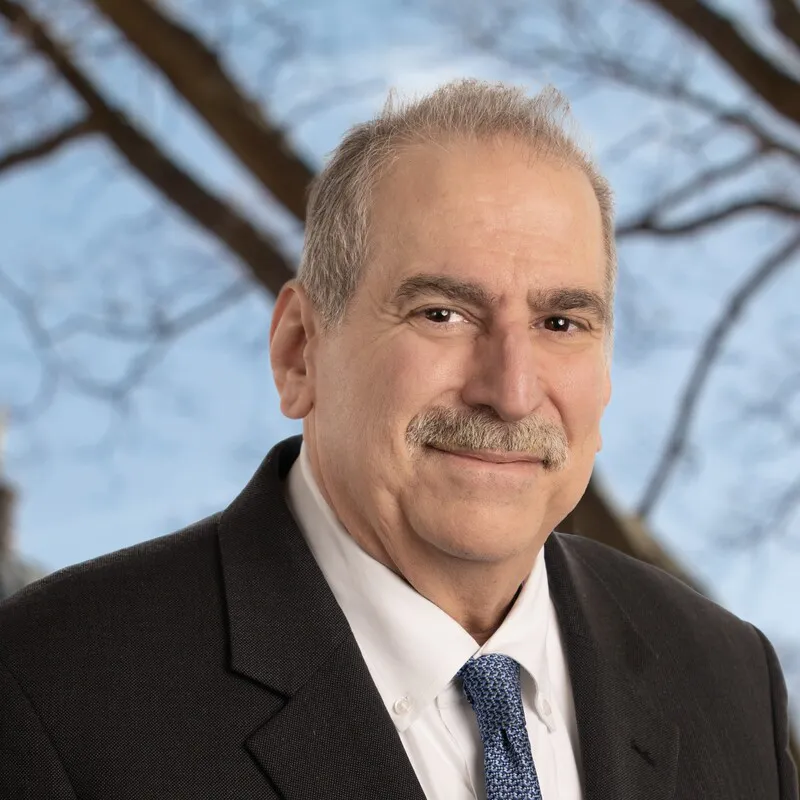
Frank Agostino
,
Esq.
During his four decades of practicing tax law, Frank Agostino has been the driving force behind many successful lawsuits that sought to establish fair tax enforcement principles for taxpayers.Frank has extensive courtroom experience, litigating more than 100 tax matters, several of which established important precedents for taxpayers. Frank defended the taxpayer in a landmark suit, Commissioner v. Zuch, 145 S.Ct. 1707 (2025),in which the U.S. Supreme Court established that the U.S. Tax Court has limited jurisdiction over certain tax enforcement matters. Similarly, in Chai v. Commissioner, 851 F.3d 190, 2nd Cir. 2017, Frank helped to establish that the IRS must obtain supervisory approval before imposing penalties in tax deficiency proceedings. In those and other significant cases, Frank’s challenges to government enforcement processes resulted in precedents that have changed the way the IRSand Tax Court do business, while equipping tax lawyers with new arguments with which to defend their clients. Because of Frank’s stellar reputation in the tax bar, he has been ranked in Chambers in Band 1for Tax: Fraud Nationwide (USA) and in Band 1 for High Net Worth Private Client: Tax. Before joining Kostelanetz, Frank was the president and founder of Agostino & Associates, a well-known tax controversy firm in New Jersey. Prior to entering private practice, Frank was an attorney with the Internal Revenue Service’sDistrict Counsel in Springfield, Illinois and Newark, New Jersey. He also served as a SpecialAssistant United States Attorney, where he prosecuted primarily criminal tax cases. As an adjunct professor, Frank taught tax controversy at Seton Hall University W. Paul StillmanSchool of Business and Rutgers School of Law. He also served as the co-director of the Rutgers Federal Tax Law Clinic. Frank is a frequent speaker and author on tax controversy and litigation matters. He serves on theAdvisory Board of the Journal of Tax Practice and Procedure. Frank is actively involved with theAmerican Bar Association and the New York County Lawyers’ Association. Frank is also the President of Taxpayers Assistance Corp., which provides tax and legal advice to low-incometaxpayers in the NY/NJ area.
Recommended Webinars
The Federal Rules of Evidence in Tax Cases – Part I
3 Free NY & NJ CLE, CPE and IRS CE/NASBA CPE Credits
Tax Professionals that attend are encouraged to accept a pro bono tax controversy case assignment from NYCLA, an ABA-sponsored Tax Court Pro program or a NY or NJ low-income Tax Clinic.

The Federal Rules of Evidence in Tax Cases – Part II
3 Free NY & NJ CLE, CPE and IRS CE/NASBA CPE Credits
This webinar is available for Virtual or LIVE In-Person attendance. Tax Professionals that attend are encouraged to accept a pro bono tax controversy case assignment from NYCLA, an ABA-sponsored Tax Court Pro program or a NY or NJ low-income Tax Clinic.
The Trial of a US Tax Court Case – Practice & Procedure Part I
3 Free NY & NJ CLE, CPE and IRS CE/NASBA CPE Credits
This webinar is available for Virtual or LIVE In-Person attendance. Tax Professionals that attend are encouraged to accept a pro bono tax controversy case assignment from NYCLA, an ABA-sponsored Tax Court Pro program or a NY or NJ low-income Tax Clinic.
Setting up MFA for Everything: A Practical How-to
1 IRS CE/1 NASBA CPE*
Join us for the second webinar in our "2025 Tax Office Cyber Security Series", designed to help accounting and tax firms enhance their security posture and protect their sensitive data. Don’t miss this opportunity to lay the groundwork for better security and peace of mind! The webinar is only available to monthly subscribers.
Setting up MFA for Everything: A Practical How-toBest Practices for Substantiating Deductions and Proving Entitlement to Losses – Part II
2 Free NY & NJ CLE, CPE and IRS CE/NASBA CPE Credits
Tax Professionals that attend are encouraged to accept a pro bono tax controversy case assignment from NYCLA, an ABA-sponsored Tax Court Pro program or a NY or NJ low-income Tax Clinic.
Best Practices for Substantiating Deductions and Proving Entitlement to Losses – Part IINAVIGATING THE BBA PARTNERSHIP AUDIT REGIME: FROM RETURN PREPARATION TO LITIGATION
2 Free NY & NJ CLE, CPE and IRS CE/NASBA CPE Credits
Tax Professionals that attend are encouraged to accept a pro bono tax controversy case assignment from NYCLA, an ABA-sponsored Tax Court Pro program or a NY or NJ low-income Tax Clinic.
NAVIGATING THE BBA PARTNERSHIP AUDIT REGIME: FROM RETURN PREPARATION TO LITIGATIONOregon Wants YOU! (Even If You Don’t Want Oregon)
NO CE AVAILABLE FOR THIS PROGRAM
A No-Nonsense Guide to Surviving Oregon’s Tax Preparer Licensing Requirements Are you a tax professional who’s never set foot in Oregon—but suddenly being told you need to register there? Welcome to the Beaver State’s latest regulatory surprise! If you touch a tax return that involves an Oregon filing, the state says you must be licensed—no matter where you live or work. This practical, step-by-step program walks you through the process, from understanding the law to acing the licensing exam. No CE credit, no whining—just clear guidance on how to comply and move on with your life.
Oregon Wants YOU! (Even If You Don’t Want Oregon)S Corp Shareholder Basis & Form 7203
2 IRS CE/2 NASBA CPE*
"Our best deal is always to become a monthly subscriber" *Self-Study recording not available for NASBA CPE credit.
S Corp Shareholder Basis & Form 7203Partner Basis and New IRS Form 7217
2 IRS CE/2 NASBA CPE*
Do you know your client's basis in their partnership interest? Do you get the usual blank stare from a new client when you ask them for their basis in their partnership interest? The IRS has opened a whole new office to audit partner basis with a team of specially trained auditors. It is the partner's responsibility to maintain their partnership basis, not the partnership's responsibility. It is not their capital account! We will review how basis is calculated for partners. The IRS just issued Form 7217 for partners who receive noncash distributions from their partnership. We will review how basis is allocated for property that is distributed to the partner. The IRS is focusing on partner basis in their audits since losses cannot be claimed when basis goes to zero.
Partner Basis and New IRS Form 7217Claiming the Energy Credits and the Business Vehicle
2 IRS CE/2 NASBA CPE*
This program examines the use of the Commercial Clean Vehicle Credit and the Clean Vehicle Credit when the vehicle has a business use component.
Claiming the Energy Credits and the Business VehicleThere’s a Lid for Every Pot—What Every Tax Pro Should Know About ‘Simple’ Returns
1 IRS CE/1 NASBA CPE*
This course explores some of the statutory and regulatory return preparation requirements to which a tax professional is subjected without respect to the perceived skill level necessary to complete a return. In addition, the course frames alternatives available to taxpayers with simpler returns (various free/low-cost tax return preparation options). Finally, it explores hazards to which supposedly simple returns expose a tax professional and reminds tax professionals of the value that even “simple” return preparation provides clients.
There’s a Lid for Every Pot—What Every Tax Pro Should Know About ‘Simple’ Returns
Hmm...nothing here yet.