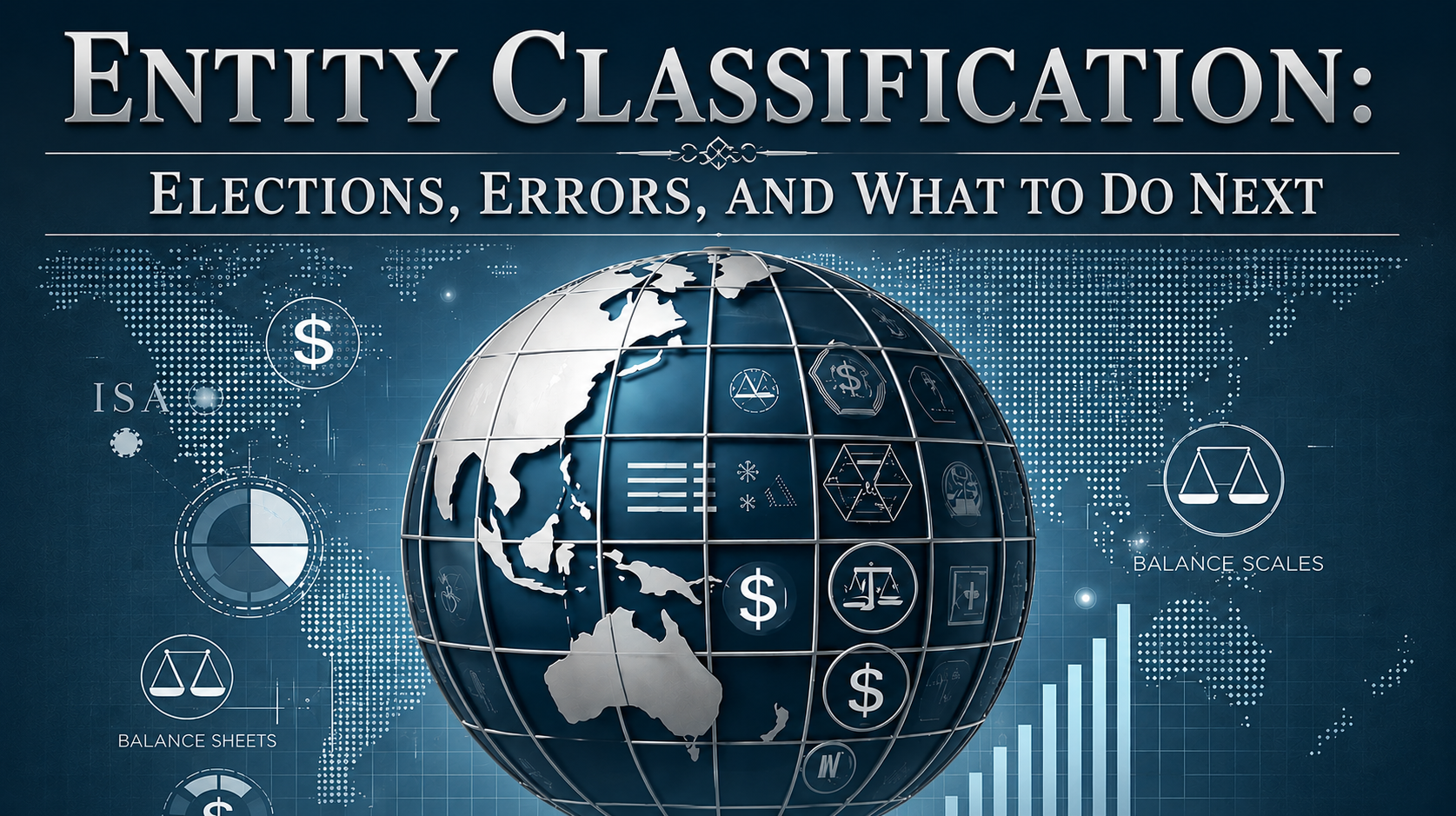
Entity Classification: Elections, Errors, and What to Do Next
Entity classification is one of the most fundamental—and most frequently misunderstood—areas of international tax compliance. A single missed or incorrect election can change the entire tax posture of a client, triggering unexpected filing obligations, exposure to penalties, and unintended tax consequences under regimes such as Subpart F or GILTI.
This program focuses on how practitioners should approach entity classification in real-world scenarios, with an emphasis on identifying and correcting mistakes. Participants will review the check-the-box regulations under Treas. Reg. §301.7701-1 through -3, including the distinction between eligible entities and per se corporations, and the application of default classification rules.
The program will walk through the mechanics of making entity classification elections using Form 8832, including effective date considerations and timing strategies. More importantly, the program will address what happens when things go wrong—such as missed elections, incorrect classifications, or misunderstandings of foreign entity structures.
Special attention is given to corrective procedures, including late election relief and practical limitations on retroactive fixes. Participants will learn how to evaluate available remedies, determine when relief is possible, and understand the downstream impact of classification decisions on filing obligations, including Forms 5471 and 8865.
Throughout the program, the focus remains on practitioner decision-making: how to identify risks, how to communicate issues to clients, and how to take appropriate next steps when entity classification problems are discovered. This is not a theoretical discussion—this is a practical guide to handling one of the most consequential issues in international tax compliance.
Upon completion of this program, participants will be able to:
-Identify the classification of domestic and foreign entities under the entity classification regulations, including distinguishing between eligible entities and per se corporations.
-Determine the default classification of foreign entities based on ownership structure and apply the rules under Treas. Reg. §301.7701-3.
-Apply the procedures for making entity classification elections using Form 8832, including evaluating effective dates and timing considerations.
-Evaluate common entity classification errors and assess available corrective options, including late election relief.
-Analyze the impact of entity classification on U.S. tax reporting obligations, including filing requirements for Forms 5471 and 8865.
Only available for TPP Unlimited CE subscribers.
*Self-Study recording not available for NASBA CPE credit.
IRS Program #: 7Q3WU-T-00883-26
CTEC Course #: 6248-CE-00230
"Our best deal is always to become a monthly subscriber"

Rita Ryan
,
Esq., LLM
Rita Ryan is the Founder of RRITS and a seasoned Tax Attorney with more than 18 years of experience advising clients on cross-border personal/business taxation, international investment structuring, multi-jurisdictional estate planning, and U.S. tax compliance obligations arising from global activities and holdings. She is widely regarded for her ability to navigate complex international tax regimes and translate evolving regulatory requirements into practical, strategic guidance.
In addition to her client-facing work, Rita serves as a trusted advisor to fellow tax professionals, providing specialized support in identifying international reporting obligations, advising on complex filings, and reviewing workpapers and forms to ensure technical accuracy in an increasingly dynamic international compliance environment.
Prior to founding RRITS, Rita served as Chief Financial Officer and Head of Private Client Services at M+, where she focused on integrated tax, business, and wealth preservation planning for high-net-worth business owners and their families. Earlier in her career, she founded and led Wolf & Co.’s International Tax Services Practice, advising both individuals and entities on the tax planning and compliance aspects of international ownership structures. Rita began her legal career in private practice as an Associate Attorney at Vacovec, Mayotte & Singer, LLP, concentrating on international and domestic taxation, estate planning, and tax controversy matters.
Rita is also an Adjunct Professor in the Graduate Tax Program at Boston University School of Law, where she co-founded and co-teaches the course Foreign Information Reporting and Withholding. In addition, she regularly teaches advanced international tax topics for Tax Practice Pros, LumiQ, and the National Association of Enrolled Agents, contributing to the education of practitioners nationwide.
Recommended Webinars
2024 Tax Controversy Seminar Series
Varies
This on-demand webinar series covers criminal tax, IRS collections, international reporting, tax controversies, AI in tax practice, and entertainment industry taxation, equipping professionals with practical strategies for compliance, dispute resolution, and risk management

FBAR Rescue & 8938 Reasons to File
2 IRS CE/2 CTEC/2 NASBA CPE*
Taxpayers with foreign financial assets may be required to file both the Foreign Bank Account Report (FBAR) and Form 8938 (Statement of Specified Foreign Financial Assets)—but understanding when and how to file can be complex. This webinar guides tax professionals through the key differences, filing thresholds, penalties, and reporting obligations for each form. Learn how to determine filing requirements, avoid common compliance pitfalls, and effectively advise clients with international financial interests. Ensure your clients stay compliant and mitigate risks with a clear understanding of these critical reporting requirements. Only available for TPP unlimited CE subscribers.
International Tax Controversies: Challenges & Strategies - 2025
4 Free NY & NJ CLE, CPE and 4 IRS CE/4 NASBA CPE Credits
This in-depth program provides comprehensive coverage of the tax implications for U.S. taxpayers with foreign income and assets. Participants will explore the complexities of reporting foreign income, compliance requirements for foreign asset disclosure, and strategies for minimizing tax liabilities under international tax treaties. The program addresses key areas such as the Foreign Account Tax Compliance Act (FATCA), the Foreign Bank and Financial Accounts (FBAR) reporting, and the taxation of foreign trusts. It also includes a discussion on the tax treatment of foreign earned income and the benefits of the Foreign Earned Income Exclusion (FEIE) and Foreign Tax Credit (FTC). The session features practical examples and case studies to help attendees navigate the intricacies of international taxation effectively and ensure compliance with both U.S. and foreign tax laws.